The Ladder of Censorship
Chapter 1: Introduction: Censorship in Runet Today and the Goals of the Article
Internet censorship in Russia is constantly evolving and has gained unprecedented momentum in recent years. Restrictions have become so massive that a parallel digital reality is forming in the country, increasingly isolated from the global information space.
At the time of writing this article, the Unified Register of Banned Websites (full name: "Unified Register of Domain Names, Website Page Pointers on the "Internet" Network, and Network Addresses Identifying Websites on the "Internet" Network Containing Information the Distribution of Which is Prohibited in the Russian Federation") contained a huge number of entries. According to the Roskomsvoboda project, their number has already exceeded 2.1 million.[1] This register includes both individual pages and entire websites, access to which is restricted on the territory of the Russian Federation.
The dynamics of blockings is especially indicative over the past few years. If before 2022 the system of restrictions was built systematically, then with the start of the full-scale invasion of Ukraine, it moved to a rapid escalation.
- 2022: After February 24, Roskomnadzor and the Prosecutor General's Office of the Russian Federation began to massively block resources. Only in the first 10 months of 2022, according to estimates by "Roskomsvoboda", Roskomnadzor blocked more than 237 thousand resources, and the Prosecutor General's Office - more than 119 thousand. A significant part of the blockings fell on independent media and resources covering the war in Ukraine.[2]
- 2023: The trend towards tightening control continued. According to official data from Roskomnadzor, about 617 thousand units of "illegal content" (sites, pages, materials) were blocked or deleted over the year.[3]
- 2024: The pace of blockings continued to grow. According to a report by the Net Freedoms Project, only in the first quarter of 2024, more than 234 thousand Internet resources were blocked in Russia - a record figure in the entire history of observations.[4]
In parallel with the blocking of websites, there is a systematic fight against censorship circumvention tools. The authorities actively block VPN services using blockings by IP addresses and connection points, as well as more complex methods of traffic analysis and filtering by protocols. This increasingly complicates access to free information for users.
Against the backdrop of these events, the possibility of blocking the largest foreign platforms, such as YouTube, is constantly being discussed. Although the complete blocking of the video hosting platform has not occurred at the time of writing (spring 2025), the platform is under constant pressure. It is issued multi-million fines for not deleting "prohibited" content, and threats of complete blocking regularly sound from officials.
Obviously, the Russian authorities do not intend to stop. The "ladder of censorship", which the country has been climbing for more than a decade, leads ever higher, to new restrictions.
The purpose of this article is to trace the history of internet censorship in Russia, analyze the logic and mechanism for introducing restrictions. We will also make a forecast about possible further steps to isolate the Runet.[29]
Chapter 2: Background: Legislative Foundations of Censorship (2012-2019)
Although attempts to regulate the Internet were made earlier, systematic Internet censorship in Russia began in 2012. Control tightened gradually: the list of grounds for blocking expanded, as did the state's technical capabilities to do so.
1. The Beginning: The "Child" Law 139-FZ and the Reaction to Protests (2012)
The starting point is considered to be Federal Law No. 139-FZ of July 28, 2012.[5] Remarkably, its adoption was preceded by a wave of mass protests in 2011-2012 caused by the results of the State Duma elections and subsequent presidential elections (also known as the "Bolotnaya Square protests" or the "white ribbon movement"). The Internet, especially social networks, played a key role then in mobilizing citizens and coordinating protests. This showed the authorities the difficulty of controlling informal horizontal connections online.
Against this background, the emergence of the first law on blocking sites was seen by many experts and human rights defenders not only as a declared measure to protect children, but also as a reaction to the protests and an attempt to take the online space under control.[7]
Formally, the law was adopted under the pretext of protecting children from harmful information (child pornography, suicide and drug propaganda). The key innovation was the creation of a Unified Register of Banned Websites. Roskomnadzor (RKN) was appointed as the register operator. Initially, the law provided for the blocking of sites based on decisions of authorized departments (FSKN, Rospotrebnadzor, RKN) and courts.
However, despite the stated good intentions, the extrajudicial inclusion of sites in the "black list" and the obligation of operators to block access to them laid the foundation for future, broader censorship in the Runet.
2. Acceleration: "Lugovoy's Law" 398-FZ (2013-2014)
The next important step was the so-called "Lugovoy's law" (Federal Law No. 398-FZ of December 28, 2013), which entered into force on February 1, 2014.[8] This law allowed the Prosecutor General's Office to demand from Roskomnadzor the immediate (within 24 hours) blocking of sites without a court decision. The basis was vague wording: calls for mass riots, extremist activity or participation in unauthorized public events. This significantly simplified and accelerated the blocking of resources objectionable to the authorities for political reasons, taking it out of the judicial plane.
3. Political Catalyst: Annexation of Crimea (2014)
The provisions of the "Lugovoy's law" were immediately put into practice against the backdrop of the political crisis around Ukraine and the annexation of Crimea. Already on March 13, 2014, at the request of the Prosecutor General's Office, several leading opposition and independent online publications (Grani.ru, Kasparov.ru, "Yezhednevny Zhurnal") and Alexei Navalny's blog in LiveJournal were blocked.[9] This clearly showed that the created mechanisms would be used to suppress criticism of the authorities and alternative points of view. In subsequent years, the practice of blocking for political reasons only expanded.
4. Execution Control: The "Revizor" System (since ~2015)
To ensure the execution by telecom operators of requirements for blocking resources from the Register, Roskomnadzor introduced the automated control system "Revizor". Special hardware and software complexes installed at operators (or to which operators were obliged to provide access) began to automatically check the availability of prohibited sites from the provider's networks. In case of detection of a "leak", the operator faced fines.[11] This increased pressure on providers and increased the effectiveness of blockings at the level of IP addresses and URLs.
5. Technical Challenge: Blocking Telegram (2018-2020)
The attempt by Roskomnadzor to block the Telegram messenger in April 2018 (by decision of the Tagansky Court of Moscow for refusing to provide encryption keys to the FSB)[12] became one of the most massive and indicative episodes in the history of Russian internet censorship. RKN tried to block the messenger's IP addresses, which led to "carpet bombings": millions of IP addresses of major hosting providers (Google, Amazon, Microsoft, etc.) fell under distribution, disrupting the operation of many services unrelated to Telegram.[13]
Despite the colossal efforts of RKN, it was not possible to completely block Telegram - the messenger used various technical tricks to bypass blockings. This "war" showed the inefficiency of the then system of blockings against technically prepared services and caused significant public dissatisfaction. On June 18, 2020, Roskomnadzor officially lifted the requirements to restrict access to Telegram, having coordinated this with the Prosecutor General's Office, de facto admitting defeat.[14]
6. Foundation for Isolation: The Law "On Sovereign Internet" 90-FZ (2019)
The failure with blocking Telegram and the general trend towards tightening control over the information space pushed the authorities to create a more powerful technical base for censorship. On May 1, 2019, Federal Law No. 90-FZ was adopted, known as the law "on the sovereign internet".[15] Officially, its goal was to ensure the stable operation of the Russian segment of the Internet in the event of external threats, including a hypothetical disconnection from the global network.
However, a key element of the law was the requirement for telecom operators to install special technical means of countering threats (TSPU) on their networks. This equipment, provided and managed centrally by Roskomnadzor, allows analyzing all passing traffic (using Deep Packet Inspection technology, DPI) and filtering it by various parameters: not only by IP or URL, but also by protocols and content of data packets.[16] The law also provided for the creation of a national domain name system (DNS) and centralized monitoring and control of the communications network.
Thus, by the end of 2019 (the main provisions of the law entered into force on November 1, 2019), Russia laid not only an extensive legislative basis for censorship, but also began to create a technical infrastructure (TSPU) for deeper and more effective traffic filtering. This prepared the ground for the next, even more radical stage of tightening control over the Runet since 2022.
Chapter 3: Escalation: Blockings after February 2022
The start of Russia's full-scale invasion of Ukraine on February 24, 2022 became a catalyst for an unprecedented tightening of Internet censorship. If earlier the system of restrictions was built gradually, now it has moved into the mode of a rapid clean-up of the information field and the isolation of the Runet.
1. Destruction of Independent Media (February-March 2022)
Literally in the first days and weeks after the start of the war, the Russian authorities launched a campaign to block all independent sources of information that covered events not in accordance with official propaganda. Based on new laws on "fakes" and "discrediting" the army, as well as on demands from the Prosecutor General's Office to block "unreliable information" and "calls for extremism", access was restricted to dozens of resources.
Among the first to be blocked were the websites of the publications Meduza, Mediazona, the Russian service of the BBC (BBC News), Radio Liberty and its projects, Deutsche Welle (DW), the Dozhd TV channel, Echo of Moscow (the radio station was later liquidated), The Village, TJournal and many others.[17] In fact, within a few weeks, the Russian audience lost access to most independent Russian-language media.[18] In parallel, major social networks were blocked - Facebook, Instagram (recognized as extremist organizations) and Twitter.[19]
2. "Hunt for VPN": Blocking Servers (2022)
Mass blockings led to a sharp increase in the popularity of VPN services as the main tool for bypassing censorship. In response, Roskomnadzor intensified their blocking. During 2022, the main tactic was blocking "by connection points" - entering the IP addresses and domain names of known VPN services into the register of blockings.[20] This led to disruption or complete blocking of access to many popular services in the Russian Federation, including Proton VPN, NordVPN, ExpressVPN, Surfshark and dozens of others.[21]
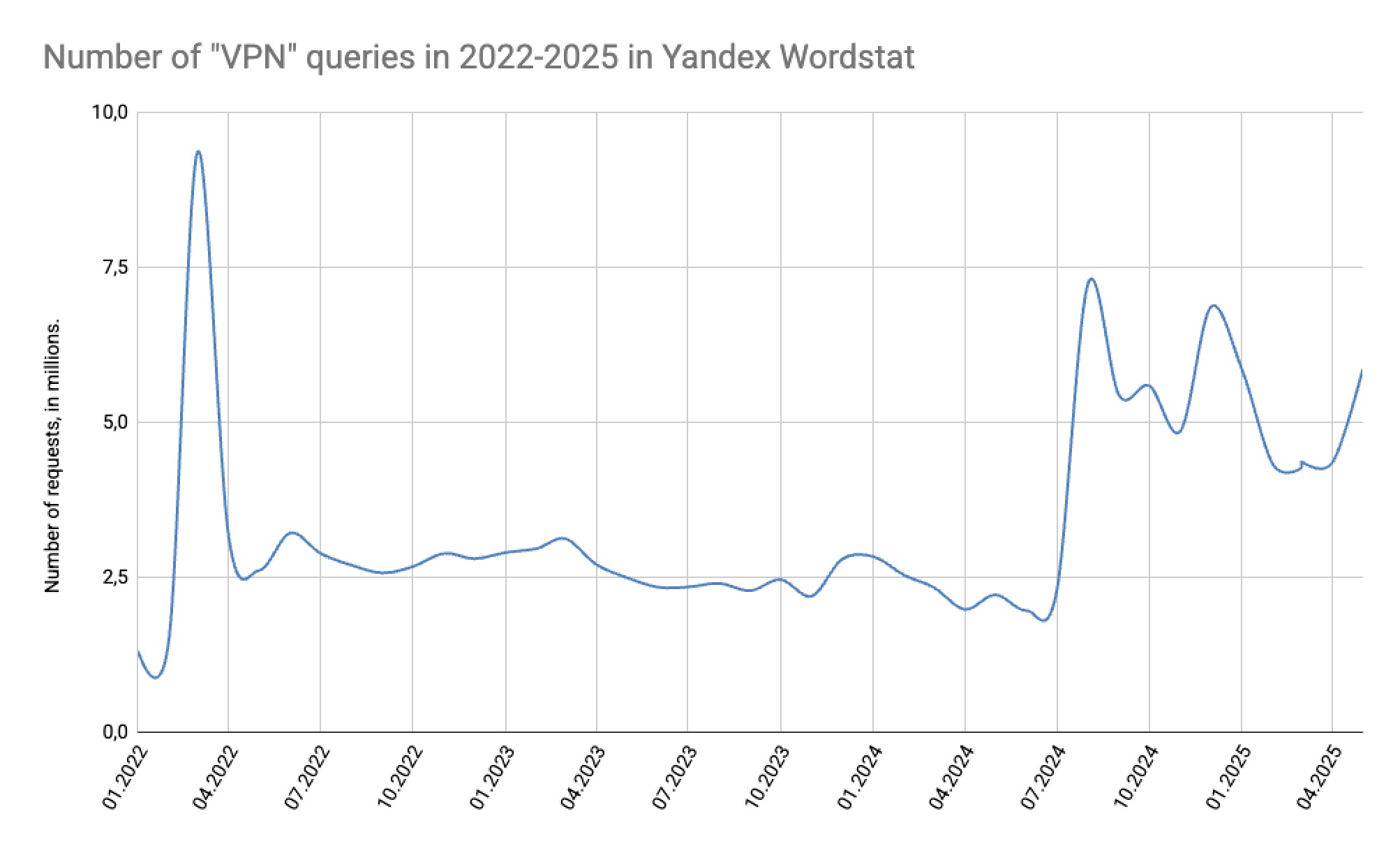
Fig 1. Dynamics of the number of "VPN" queries in the Russian search engine Yandex
3. A New Stage of the Struggle: Protocol Blocking (since August 2023)
By 2023, it became obvious that blocking only by server IP addresses was not effective enough - services could quickly change addresses. Then the authorities moved to the next stage, using the capabilities of the TSPU equipment installed on operator networks according to the law "on the sovereign internet".
From August-September 2023, massive problems began with the operation of VPNs using popular protocols, such as OpenVPN and WireGuard, as well as IPsec/IKEv2.[22] The DPI system on the TSPU learned to recognize the characteristic traffic signatures of these protocols and purposefully break or slow down such connections, even if the server's IP address was not in the block register.[24]
4. De Facto Blocking of YouTube (Summer 2024)
The largest video hosting site YouTube, which for a long time remained the largest international platform accessible in Russia without a VPN, was de facto blocked in the summer of 2024. Although formally the service was not entered into the register of banned sites overnight throughout the country, the authorities applied a deep traffic filtering mechanism (DPI) using the TSPU to radically slow down access to video content.
Starting around July-August 2024, users in many regions of Russia faced the fact that videos on YouTube stopped loading, or the download became so slow that viewing became impossible.[25]
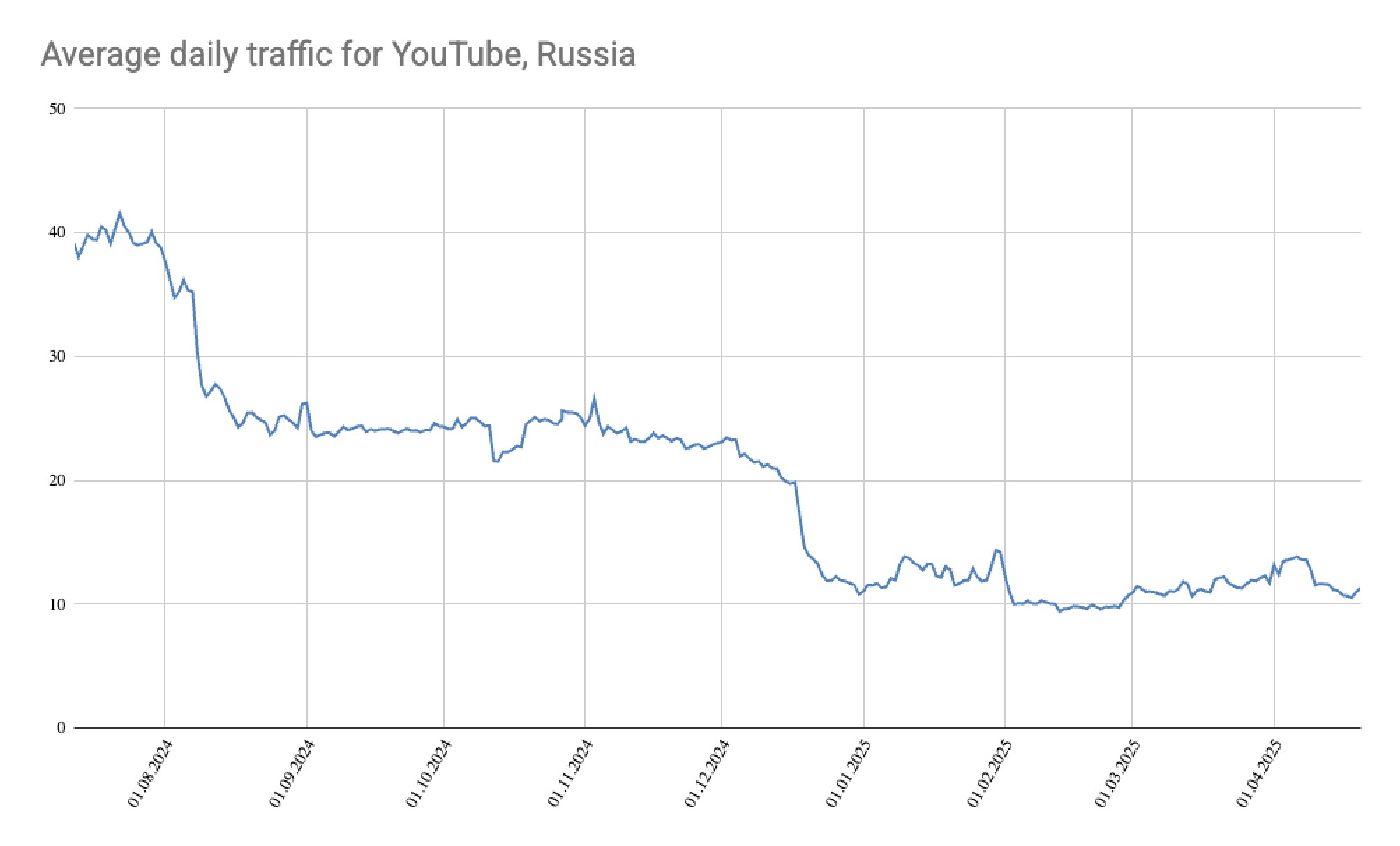
Fig 2. Visualization of YouTube throttling via TSPU
The key reasons for the de facto blocking in the summer of 2024 were:
- Inability to fully control content: The platform remained a space for disseminating information about the war in Ukraine that contradicted the official position of the Russian Federation.
- Presence of "undesirable" channels: YouTube provided a platform for independent media, opposition politicians and bloggers.
- Systematic non-compliance with requirements: Google ignored thousands of demands from Roskomnadzor to remove content.
- Course towards "digital sovereignty": As part of the general strategy to isolate the Runet, YouTube remained the last major foreign platform.
5. Blocking of Messengers and Platforms (2024)
In the fall of 2024, it became known that Roskomnadzor was preparing to block the popular messenger Discord.[27] Also earlier, steps were taken to restrict access to the secure messenger Signal.[28] Restrictions on other platforms that could be seen as channels for distributing "undesirable" content also continued.
6. Side Effect of Censorship: Massive Outages in Runet (2024-2025)
Starting from 2024, and especially during 2025, users in Russia began to increasingly encounter large-scale and systemic disruptions in the operation of the Internet. These incidents are a direct side effect of the operation and complication of the state censorship system based on TSPU.[29]
Chapter 4: The Blocking Mechanism: Politics, Law, Technology, Resources
The process of tightening internet censorship in Russia is not chaotic. An analysis of events shows that the authorities are acting consistently, learning lessons from previous stages. Four key elements can be identified: political decision, administrative and legal justification, technical capability, and resources.
1. Political Will
The starting point is always a political decision at the highest level. A striking example is the emergence of the first law on "black lists" of sites (139-FZ) in 2012. The country's leadership saw the Internet as an effective mobilization tool that was out of their control.[31]
2. Administrative and Legal Justification
In an authoritarian state, any political decision requires formal consolidation. The list of reasons for blocking constantly grew: "extremism", calls for unsanctioned actions, "fakes", "discrediting" the RF Armed Forces, data on circumventing blockings, etc.[32] The circle of bodies initiating blockings also expanded.[33]
3. Technical Capability
Passing laws is half the battle. We need to achieve their implementation. In the early stages, blockages were easily bypassed using VPNs.[34] The failure with Telegram showed the need for a centralized deep packet inspection (DPI) system controlled by the state. This is how the TSPU system was born.
4. Resource Availability
A centralized system of total control is an extremely expensive project. According to estimates, by 2024, more than 134 billion rubles were allocated from the budget for the infrastructure of the "sovereign Runet", including the TSPU.[36]
5. Process: An Example of Blocking a VPN
At the beginning of 2025, a draft order from RKN was published, ordering operators to collect and transmit technical identifiers of user equipment and detailed session logs.[37] This indicates a continuous infusion of resources into the improvement of censorship.[38]
6. More details: Why RKN collects logs and the possible "statistical method"
Assumptions are put forward about the application of the "statistical method" of VPN detection. If RKN cannot reliably block VPN traffic itself, it can try to identify VPN users by patterns in their network activity, analyzing metadata from logs.
Chapter 5: Forecast: The Next Steps on the "Ladder of Censorship"
1. Proof of the existence of the "ladder": The inevitability of escalation
The history of internet censorship in Russia shows a trend towards constant escalation. The first laws are passed under the plausible pretexts of protecting children.[40] The low efficiency of blockages by operators forces the state to build a centralized filtering system. Once huge resources have been spent, the censorship machine will seek to expand its scope.
2. Steps passed in the Russian Federation
- Blocking IPs and sites using "black lists" (since 2012).
- Extrajudicial blockings at the request of the Prosecutor General's Office (since 2014).
- Mass blocking of independent media (March 2022).
- Blocking of Facebook, Instagram, Twitter (2022).
- Protocol blocking of VPNs via TSPU (since August 2023).
- De facto blocking of YouTube (since Summer 2024).
3. Current step (Spring 2025)
At the moment, Russia is at the stage of further struggle against VPNs. The IP addresses of CDNs (Cloudflare) and hosting providers used for VPNs are being actively blocked.[45]
4. Forecast of the next steps
- Blocking Telegram: The messenger remains the last mass platform outside the full control of the Kremlin.
- Implementation of statistical VPN blocking methods: Using logs to identify traffic patterns.
- Blocking large blocks of IP addresses: Transition to blocking entire subnets of foreign hosting providers.
- "Grey lists" and degradation of connection quality: The tactic of implicit restrictions and throttling.
- Transition to "white lists": Only what is approved is allowed.
- Full isolation of Runet (Splinternet): A scenario of a "digital iron curtain" by analogy with North Korea.
Chapter 6: The Censor's Dilemma: Control vs. Economy
Excessively severe blockings inevitably harm the economy: they introduce delays into business operations, complicate the work of IT companies, and cause collateral damage. The example with YouTube is indicative: the "throttling" tactic was chosen to minimize collateral damage to Google services.[46] As we move up the "ladder", the space for compromise will narrow.
Chapter 7: The Outcome of the Confrontation: Information vs. Isolation
Scenario A: Circumvention works. If circumvention technologies develop faster than blocking technologies, censorship will remain partially ineffective. VPN penetration in Russia as of spring 2025 is estimated at up to 44 million users (~40%).
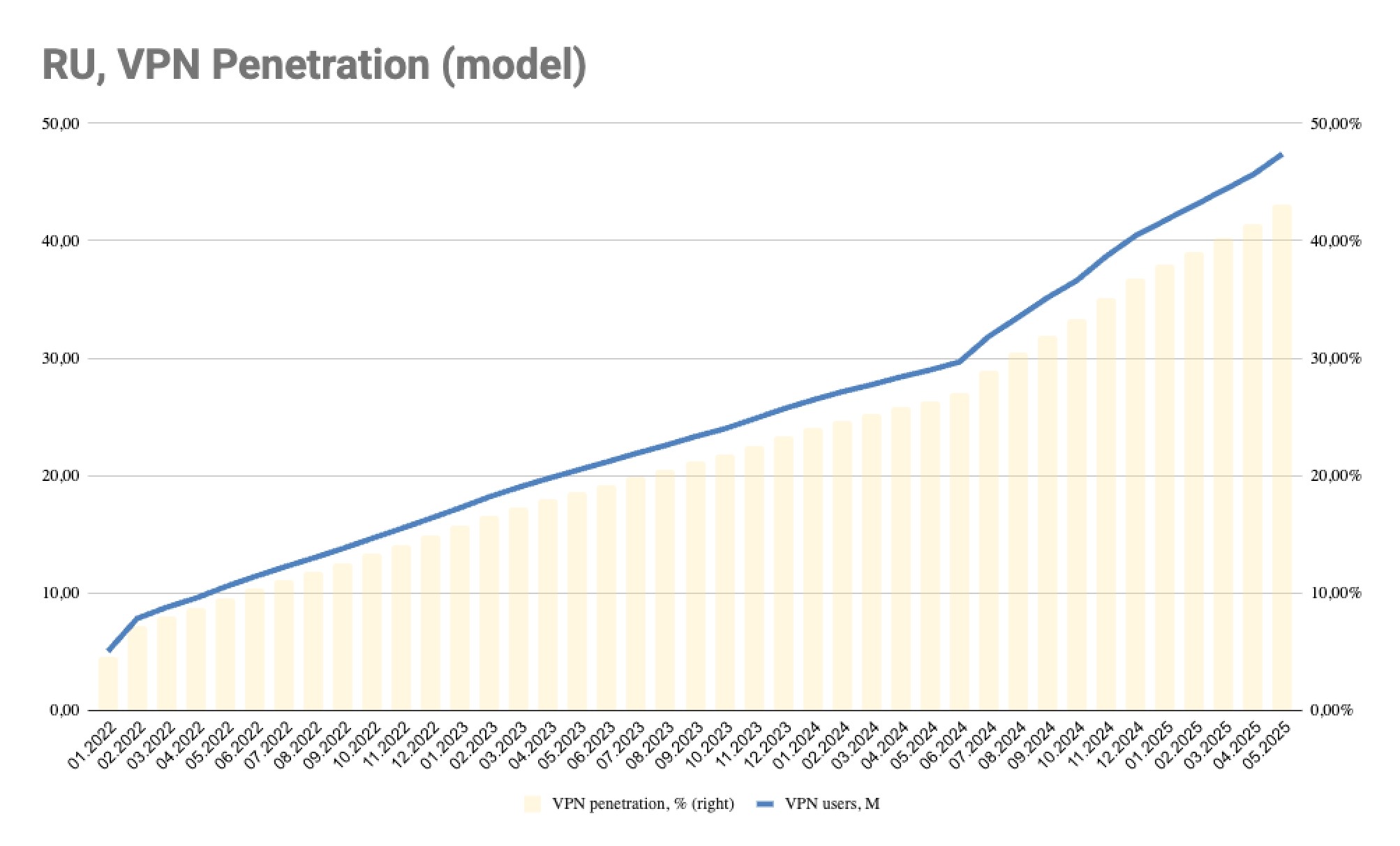
Fig 3. Model of VPN penetration among Russian users (forecast for 2025)
Scenario B: Isolation wins, at the cost of self-destruction. The destruction of ties with the global economy will inflict a devastating blow on the Russian economy. Economic collapse may prove to be a greater threat to the authorities than free access to information.
Conclusion
Internet censorship in Russia is a consistently built system, a "ladder of censorship". Driven by political will, it relies on an expanding legislative base and complex technical means (TSPU). Further upward movement seems inevitable. The outcome of the process remains uncertain: either the efforts of society will preserve access to information, or an attempt to build a "digital iron curtain" will lead to self-destructive consequences for the country.
References
[1] Statistics of the register of banned sites // Roskomsvoboda URL: https://reestr.rublacklist.net/ru/statistics/
[2] Blocking of sites, "fakes" and "discrediting" the RF Armed Forces, pressure on IT companies, censorship and repression against journalists and citizens: results of 10 months of war // Roskomsvoboda URL: https://roskomsvoboda.org/ru/post/o-blokirovkah/
[3] Roskomnadzor in 2023 deleted or blocked 617 thousand banned materials // Interfax URL: https://www.interfax.ru/russia/942025
[4] In the Russian Federation in the first quarter of 2024, a record number of sites were blocked // DW URL: https://www.dw.com/ru/v-2024-godu-rf-zablokirovala-recordnoe-cislo-sajtov/a-71439595
[5] Federal Law No. 139-FZ of July 28, 2012 // President of Russia URL: http://www.kremlin.ru/acts/bank/35814
[6] Soldatov, Andrei; Borogan, Irina (2015). The Red Web: The Struggle Between Russia's Digital Dictators and the New Online Revolutionaries. PublicAffairs.
[7] Russia: Internet Blacklist Law Threatens Free Expression // Human Rights Watch URL: https://www.hrw.org/news/2012/07/13/russia-internet-blacklist-law-threatens-free-expression
[8] Putin signed "Lugovoy's law" on blocking sites // Forbes Russia URL: https://www.forbes.ru/news/249414-putin-podpisal-zakon-lugovogo-o-blokirovke-saitov
[9] Roskomnadzor blocked access to Grani.ru, Kasparov.ru, YEZh.ru and Navalny's LiveJournal // Vedomosti URL: https://www.vedomosti.ru/politics/articles/2014/03/13/roskomnadzor-ogranichil-dostup-k-sajtam-grani-ru-kasparovru
[10] Roskomnadzor launched the "Revizor" system to check blockings // CNews URL: https://www.cnews.ru/news/top/2015-11-17_roskomnadzor_zapustil_sistemu_revizor_dlya
[11] Roskomnadzor will be able to fine operators for incomplete blocking of sites // RBC URL: https://www.rbc.ru/technology_and_media/19/11/2015/564dc1179a794787080e96e4
[12] The court satisfied the claim of Roskomnadzor to block Telegram // TASS URL: https://tass.ru/ekonomika/5121110
[13] Blocking Telegram in Russia: chronicle of events // BBC News Russian service URL: https://www.bbc.com/russian/features-43788180
[14] Roskomnadzor announced the unblocking of Telegram // Kommersant URL: https://www.kommersant.ru/doc/4384568
[15] Federal Law No. 90-FZ of 01.05.2019 // President of Russia URL: http://www.kremlin.ru/acts/bank/44168
[16] How the law on the "sovereign Runet" will work. Parsing // RBC URL: https://www.rbc.ru/technology_and_media/31/10/2019/5db99f749a794743631a61f8
[17] See source [2]
[18] Russia: Unprecedented Attack on Freedom of Expression and Access to Information // Amnesty International URL: https://www.amnesty.org/en/documents/eur46/5399/2022/en/
[19] Russia blocks access to Facebook and Twitter // BBC News URL: https://www.bbc.com/news/technology-60622846
[20] How Roskomnadzor blocks VPN and how it is bypassed // Habr URL: https://habr.com/ru/articles/669114/
[21] Roskomnadzor confirmed the blocking of a number of VPN services // Forbes Russia URL: https://www.forbes.ru/tekhnologii/467629-roskomnadzor-podtverdil-blokirovku-rada-vpn-servisov
[22] Disruptions in the operation of OpenVPN and WireGuard VPN protocols began in Russia // Forbes Russia URL: https://www.forbes.ru/tekhnologii/494678-v-rossii-nacalis-sboi-v-rabote-vpn-protokolov-openvpn-i-wireguard
[23] Roskomnadzor began testing the blocking of VPN protocols // RBC URL: https://www.rbc.ru/technology_and_media/07/09/2023/64f8df9f9a79479c73a846a7
[24] Experts explained how VPN protocols are blocked in Russia // CNews URL: https://www.cnews.ru/news/top/2023-09-11_eksperty_obyasnili_kak_v_rossii
[25] No network observed. The actual blocking of YouTube began in Russia // The Insider URL: https://theins.ru/inv/273729
[26] "The last showcase of the world". Why the Russian authorities still haven't blocked YouTube // BBC News Russian service URL: https://www.bbc.com/russian/articles/c30nvn6ngepo
[27] RKN is preparing to block Discord // Meduza URL: https://meduza.io/feature/2024/09/27/rkn-gotovitsya-zablokirovat-discord
[28] Signal was blocked in Russia. True, it can still be used // Meduza URL: https://meduza.io/cards/v-rossii-zablokirovali-signal
[29] A side effect of censorship: Runet failures // Verstka URL: https://verstka.media/pobochnyi-effekt-czenzury-sboi-runeta-proishodyat-vse-chashhe-pochemu-oni-opasnee-blokirovok
[30] See Chapter 2 of this article
[31] Freedom House, Freedom on the Net and Freedom of the Press reports for Russia. URL: https://freedomhouse.org/country/russia
[32] Consolidated review of legislation // Roskomsvoboda URL: https://roskomsvoboda.org/laws/; Report "Internet Freedom 2023" // Agora URL: https://agora.legal/reports/svoboda-interneta-2023-desat-let-cenzury-runeta-2024/
[33] See the Agora reports cited in [32]
[34] Site blockings in Russia: the economics of circumvention // RBC Trends. URL: https://trends.rbc.ru/trends/industry/61681f2e9a79472c8177462c
[35] See source [11]
[36] "Sovereign Runet" left abroad // The Insider URL: https://theins.ru/politika/265575
[37] Roskomnadzor will collect data on internet users' equipment // Meduza URL: https://meduza.io/cards/roskomnadzor-budet-sobirat-dannye-ob-oborudovanii-internet-polzovateley-dlya-borby-s-vpn; RKN published a draft order on the transfer of logs // Habr URL: https://habr.com/ru/news/897058/
[38] RKN weaves new networks: the service will update the site blocking system // Forbes Russia URL: https://www.forbes.ru/tekhnologii/520876-rkn-pletet-novye-seti-sluzba-obnovit-sistemu-blokirovki-sajtov-za-59-mlrd-rublej
[39] Age verification for online pornography // UK Government Digital Service URL: https://www.gov.uk/guidance/age-verification-for-online-pornography
[40] Rimmer, Matthew. The Rudd Government Kills The Clean Feed Filter: A Post Mortem. URL: https://papers.ssrn.com/sol3/papers.cfm?abstract_id=2241053
[41] OZI report "Internet in Russia under state control: results of 2023". URL: https://ozi-ru.org/research/internet-v-rossii-pod-kontrolem-gosudarstva-itogi-2023-goda/
[42] See reports on the operation of the Great Firewall of China (GFW): https://gfw.report/
[43] Iran's National Information Network (NIN) // Article19. URL: https://www.article19.org/resources/irans-national-information-network-nin/
[44] Turkey: Freedom on the Net 2023 // Freedom House. URL: https://freedomhouse.org/country/turkey/freedom-net/2023
[45] What happens if Cloudflare is completely blocked in Russia? URL: https://dtf.ru/flood/3651151-chto-budet-esli-polnostyu-zablokiruyut-cloudflare-v-rossii; Expert: Cloudflare is used by about 44% of Russian sites // Ferra.ru URL: https://www.ferra.ru/news/techlife/ekspert-cloudflare-ispolzuyut-okolo-44-rossiiskikh-saitov-11-11-2024.htm
[46] See Chapter 3 of this article, point 4 (about blocking YouTube)